Cocoa cookies are as cute as can be

cocoacookies copy

My 2013 cookie countdown to Christmas begins with this post. I know Thanksgiving hasn’t passed yet, but I’m already testing new recipes. I put my little Christmas tree up yesterday while listening to Christmas music, so the holidays are in full force at my place. I’m excited to share some new favorites with you.

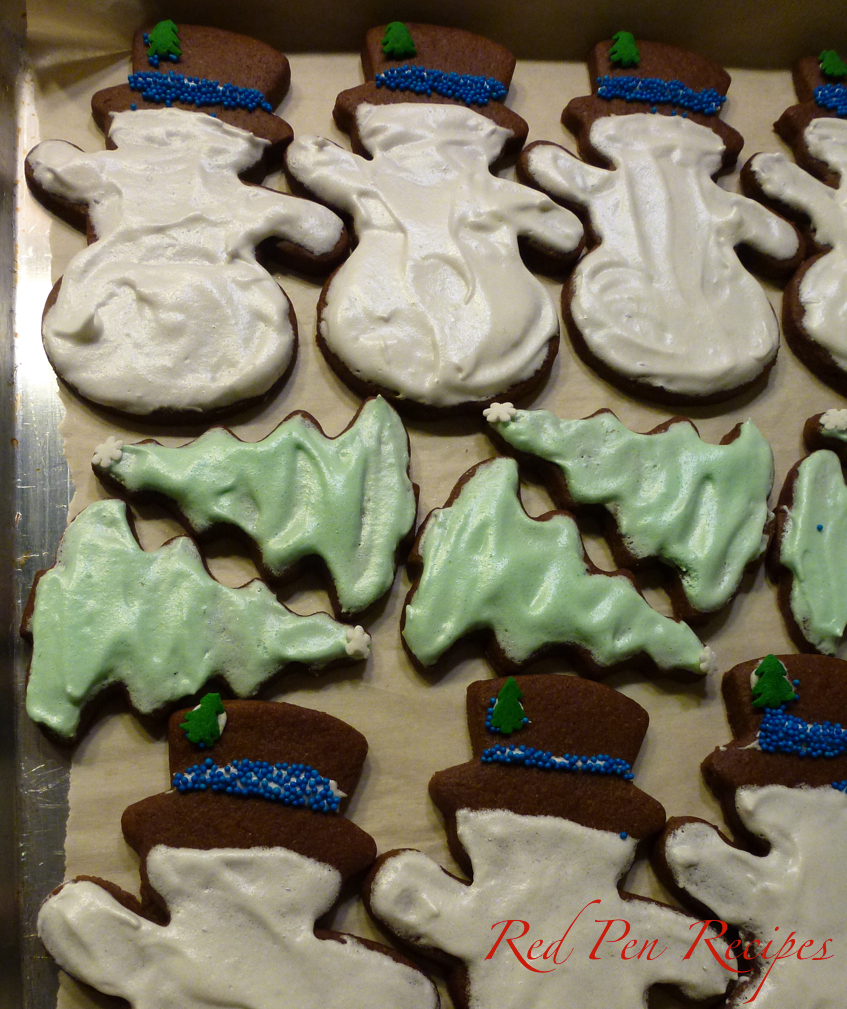
My favorite new decorated cookie from last year was Food Network Magazine’s hot cocoa cookie recipe. I saw the recipe in the December 2012 edition as I was perusing for new recipes. The cookie is a chocolate cutout cookie topped with marshmallow cream. The recipe in the magazine called for making a sandwich cookie loaded with the cream, but it only makes 15 sandwich cookies — not enough for my large family. I decided to do a single cookie topped with the cream.

Though the recipe called for store-bought marshmallow cream, I pride myself on making things from scratch. This was no exception. While I know how to make marshmallows, I didn’t know how to make marshmallow creme. I turned to this recipe from Bon Appétit for help.

The chocolate cookie isn’t too rich, and the marshmallow cream was a really nice change from traditional icing or buttercream frosting, which is what I use on my sugar cookies. Plus, it gave me a chance to decorate in a different way. I love how they turned out. They just put a smile on my face.Christmaskitchen

Cookies
2 1/4 cups cake flour, plus more for dusting
1/4 cup unsweetened Dutch-process cocoa powder
1 teaspoon baking soda
1/4 teaspoon salt
2 sticks unsalted butter, at room temperature
3/4 cup sugar
1 large egg
1 teaspoon vanilla extract

Sift the flour, cocoa powder, baking soda and salt into a medium bowl.

Beat the butter and sugar in a large bowl with a mixer on medium-high speed until light and fluffy, 3 to 5 minutes. Add the egg and vanilla and beat until incorporated. Reduce the mixer speed to low; add the flour mixture in 2 batches and beat until just incorporated. Divide the dough in half, wrap in plastic wrap and refrigerate until firm, at least 1 hour and up to 1 day.

Line 2 baking sheets with parchment paper. Working with 1 piece of dough at a time, dust the dough generously with flour and roll out between 2 pieces of parchment paper until about 1/8-inch thick. Cut out shapes using 2- to 4-inch cookie cutters and transfer to the prepared baking sheets. Gather the scraps and refrigerate until firm; reroll once to cut out more cookies. Refrigerate the cutouts until firm, about 30 minutes.

Position racks in the upper and lower thirds of the oven and preheat to 350 degrees F. Bake the cookies, switching the position of the pans halfway through, until slightly puffed and darker around the edges, 12 to 15 minutes. Let cool 5 minutes on the baking sheets, then transfer to racks to cool completely. Sandwich the cookies with the marshmallow cream.

Marshmallow creme
1 cup sugar, divided
4 egg whites
Pinch of kosher salt
1 teaspoon vanilla extract

Combine 3/4 cup sugar and 1/4 cup water in a small saucepan over medium-high heat. Attach a candy thermometer to the side of the pan and simmer syrup without stirring until the thermometer reads 240 degrees F, occasionally swirling pan and brushing down sides of pan with a wet pastry brush.

Meanwhile, place egg whites, salt, and vanilla in the bowl of a stand mixer fitted with a whip attachment. Whip on high until frothy. Slowly add remaining 1/4 cup sugar. Whip until soft peaks form. Continue whipping until medium peaks form. Reduce speed to medium, then pour hot syrup into meringue in a slow, steady stream while whipping. Increase speed to high and continue whipping until stiff peaks form. Reduce speed to medium and whip until meringue is cool.

Seasonal cake worth celebrating

1pumpkincake102713

It’s time to jump on the pumpkin bandwagon. Pinterest is exploding with fall recipes and Starbucks has its Pumpkin Spice Latte back in stores. Two occasions at the end of October provided a good reason to bust out my cans of pumpkin puree. The first was my sports editor’s last day. The second is my dad’s birthday, which falls on Halloween.

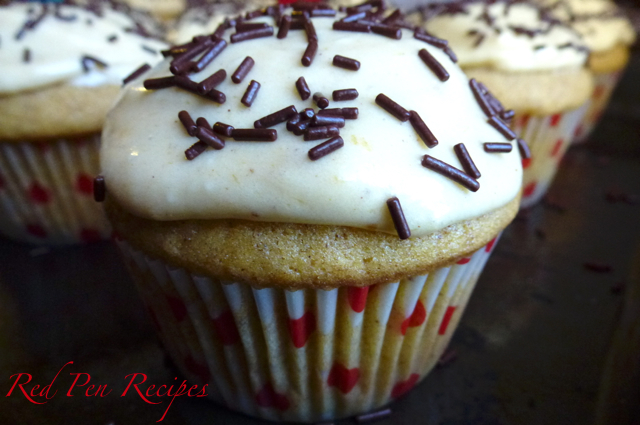
My sports editor loves pumpkin-flavored things, so the week before she left I started brainstorming about what to make for her. I came across this recipe for pumpkin-spice cake and knew it would fit the bill. The problem was that I hadn’t yet successfully made cupcakes at high altitude. Every time I previously tried, the tops sank in or didn’t rise, or I had to cook them longer to see if they would get there, and then the outside would be overcooked. But, it was about time to give it another go, so I put on my apron and got to it.

I only wanted to make a dozen cupcakes, so I cut the original recipe in half. I made all the alterations based on the adjustments that I’ve learned work at high altitude. I used a bit more flour, less of the leaveners and more salt. It worked. The cupcakes had a beautiful crumb and rose exactly as they should. They are, by far, the best cupcakes I’ve made at high altitude, and definitely make the top five of all time.

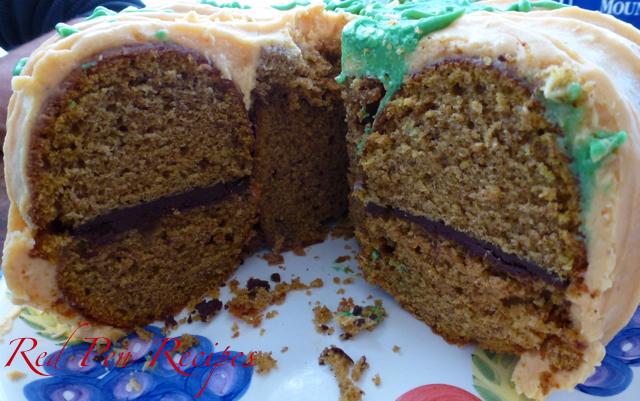
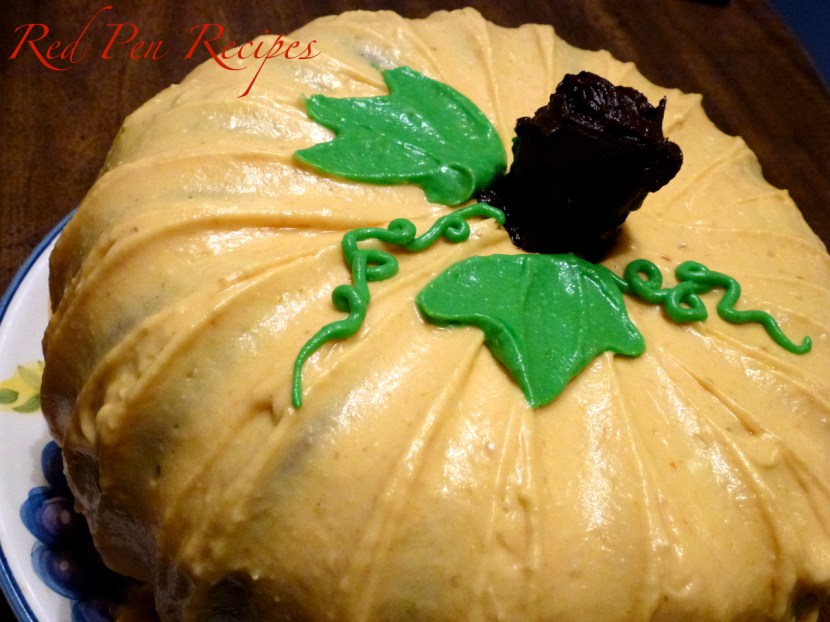
Since the cupcakes were such a hit with my staff on my sports editor’s last day on the job, I decided to also use the recipe to make my dad’s birthday cake. A while ago, I saw an idea on Pinterest for a pumpkin cake. Upon closer examination, I realized they used a pumpkin pan, but I decided to play off that creation by making two smaller bundt cakes and turning one on top of the other. It is one of the best cakes I’ve ever made — though, to give credit where it’s due, my best friend came up with the idea on how to create the pumpkin-like ridges in the frosting, and he drew the leaves. Decorating is not my thing, but it can be fun to learn a trick or two.

This dessert has a double dose of pumpkin, as both the cake and frosting contain it. But it isn’t overwhelming, and neither are the spices in the cake. The flavor is balanced, which is why I enjoyed them so much.

I’ve provided the cupcake recipe at high altitude and the cake recipe at regular altitude. However, if you want to make a cake at high altitude, double the cupcake recipe below. If you want to make one dozen cupcakes at regular altitude, cut the cake recipe in half. Or, if you want to make two dozen, leave it as is.

Happy Halloween, everyone. Happy birthday, dad!

2pumpkincake102713One dozen cupcakes (at high altitude)
1 2/3 cups all-purpose flour
1 teaspoon baking powder
1 teaspoons ground cinnamon
3/4 teaspoon ground cloves
1/2 teaspoon ground allspice
1/2 teaspoon ground nutmeg
1 teaspoon salt
1 1/3 cups granulated sugar
1/2 cup vegetable oil, plus more as needed
2 large eggs
1/2 of a (15-ounce) can pumpkin purée

Heat the oven to 350 degrees F and arrange a rack in the middle. Line a 12-muffin pan with paper liners and coat the liners with vegetable oil or cooking spray; set aside.

Place the sugar and measured oil in the bowl of a stand mixer fitted with the paddle attachment. Beat on medium speed until the sugar is incorporated, about 1 minute. Stop the mixer and scrape down the sides of the bowl and the paddle with a rubber spatula.

Return the mixer to medium speed and add the eggs 1 at a time, beating well after each addition, about 1 1/2 minutes total mixing time. Reduce the speed to medium low, add the pumpkin, and beat until just combined, about 30 seconds. Stop the mixer and scrape down the sides of the bowl and the paddle with a rubber spatula.

Add the flour, baking powder, cinnamon, cloves, allspice, nutmeg and salt and beat slowly until almost completely incorporated, about 1 minute. Remove the bowl from the mixer and fold in any unincorporated flour at the edges with a rubber spatula, making sure to scrape to the bottom of the bowl.

Fill the muffin wells three-quarters of the way (about a heaping 1/4 cup per well). Bake for 15 minutes or until a toothpick inserted in a cupcake comes out clean.

Meanwhile, make a half batch of frosting (recipe below).

Place the pan on a wire rack and let cool for 5 minutes. Remove the cupcakes from the pans and cool completely on the racks. Frost.

3pumpkincake102713Cake (at regular altitude)
3 1/4 cups all-purpose flour
2 teaspoons baking powder
2 teaspoons ground cinnamon
1 1/2 teaspoons ground cloves
1 teaspoon ground allspice
1 teaspoon ground nutmeg
1/2 teaspoon baking soda
1/2 teaspoon fine salt
2 3/4 cups granulated sugar
1 cup vegetable oil, plus more as needed
4 large eggs
1 (15-ounce) can pumpkin purée (not pie filling; about 1 3/4 cups)

Heat the oven to 350 degrees F and arrange a rack in the middle. Grease and flour one regular-size bundt pan — or two, if you have them.

Place the flour, baking powder, cinnamon, cloves, allspice, nutmeg, baking soda, and salt in a large bowl and whisk to aerate and break up any lumps; set aside.

Place the sugar and measured oil in the bowl of a stand mixer fitted with the paddle attachment. Beat on medium speed until the sugar is incorporated, about 1 minute. Stop the mixer and scrape down the sides of the bowl and the paddle with a rubber spatula.

Return the mixer to medium speed and add the eggs 1 at a time, beating well after each addition, about 1 1/2 minutes total mixing time. Reduce the speed to medium low, add the pumpkin, and beat until just combined, about 30 seconds. Stop the mixer and scrape down the sides of the bowl and the paddle with a rubber spatula.

Turn the mixer to low speed, slowly add the flour mixture, and beat until almost completely incorporated, about 1 minute. Remove the bowl from the mixer and fold in any unincorporated flour at the edges with a rubber spatula, making sure to scrape to the bottom of the bowl.

Put half of the batter into the bundt pan. Bake the cake for 40-55 minutes, or until a toothpick inserted into the center of the cake comes out clean.

Let the cake cool for 5-10 minutes, or until you are able to remove the cake from the pan cleanly. Let cake cool on a plate or wire rack. Leave the oven on and let pan sit for another 5 minutes, then grease and flour pan again and put remaining half of batter in it. Bake the cake for 40-55 minutes, or until a toothpick inserted into the center of the cake comes out clean.

Meanwhile, make frosting (recipe below).

Once cakes have cooled, turn so the part of the cake that was facing up when it was baked is once again facing up. Using a bread knife, cut convex part off, so top becomes flat. Set cake scraps aside. Repeat on other bundt.

Put frosting on the flat side of one bundt. Top by turning over the other bundt and placing it on top. Fill the hole in the middle with the scraps. Spread frosting all over cake. To achieve effect shown in photo, drag the back of a spoon from the bottom to the top of the cake. Repeat around entire cake. To create leaves, add about 10 drops of green food coloring to remaining frosting. Use a knife to make leaves. Use a piping bag or plastic bag filled with frosting to draw tendrils.

Pumpkin-and-Cream-Cheese Frosting
4 cups powdered sugar, sifted
1 teaspoon ground cinnamon
1/4 teaspoon freshly ground nutmeg
12 ounces cream cheese, at room temperature
8 tablespoons unsalted butter (1 stick), at room temperature
1/3 cup pumpkin purée (not pie filling)

Place the sugar, cinnamon, and nutmeg in a medium bowl and whisk to combine; set aside.

Place the cream cheese and butter in the bowl of a stand mixer fitted with a paddle attachment and beat on medium speed until fully combined and smooth, about 1 minute.

Reduce the speed to low, slowly add the powdered sugar mixture, and beat until fully incorporated and smooth, about 3 minutes. Stop the mixer and scrape down the paddle and sides of the bowl with a rubber spatula.

Turn the mixer to medium speed, add the pumpkin, and mix until fully incorporated and smooth, about 1 minute. Use immediately.

Having fun with a less common fall flavor

almondpeartart092913

Fall is here, and that means it’s time for baking comfort foods with apples and pumpkin. Last weekend, I went wine tasting in the Apple Hill area and stopped at a farm stand on my way home. The best deal at the farm stand was a box of about eight pears for $2. I bought two boxes because I knew I’d want to bake with them.

But, before I proceed, I want to let you know that Red Pen Recipes now has a Facebook page. Like it here.

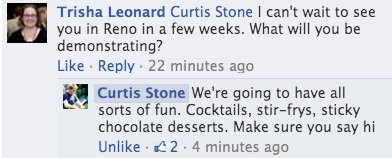
Screen shot 2013-09-25 at 8.14.25 PMI also recently purchased a ticket to see Curtis Stone in Reno. Those of you who read regularly know that I love his style of cooking. According to his response to the question I posed to him on Facebook, we’ll be having cocktails, stir-frys and chocolate. The countdown to Oct. 12 has begun.

So, back to the pears. When I got home, I started looking for recipes and found this Pear and Almond Tart recipe from Bon Appétit. I had all of the ingredients, and it sounded like the perfect way to use a few of those pears.

This recipe has three major components, all of which can be done separately and saved until you’re ready to assemble the whole thing. If you don’t want to spend hours at a time in the kitchen, do one piece at a time.

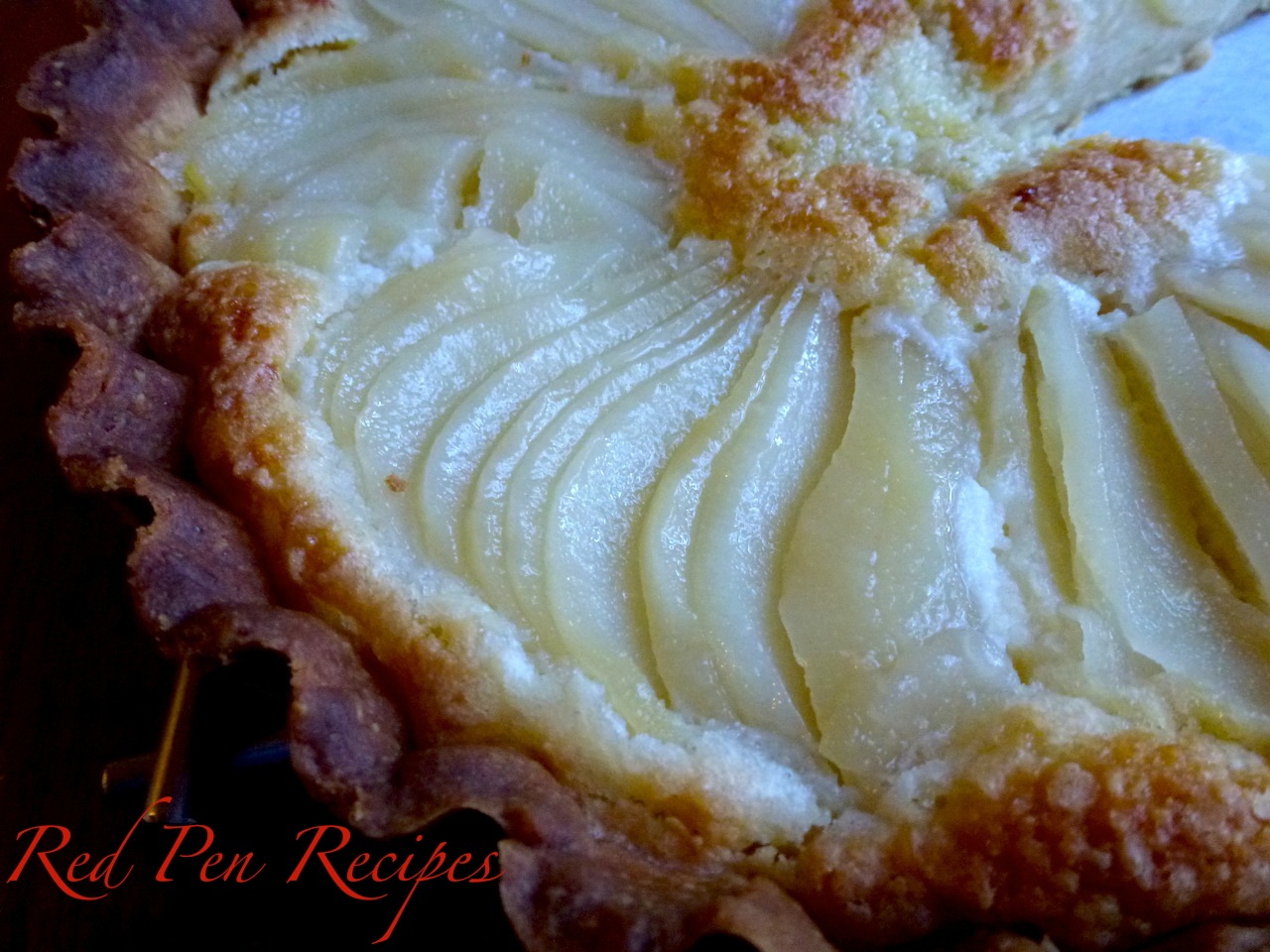
I know my crust looks burned in the photo, but it didn’t taste like it at all. I was pleasantly surprised.

The recipe didn’t say to save the liquid from poaching the pears, but I knew from experience that I could boil it into a syrup. A beautiful simple syrup is a terrible thing to waste so I decided to use it to make ice cream.

For the ice cream, I used this recipe. If you plan on using the syrup for ice cream, you have to do things just a bit differently. I’d recommend adding a fourth pear to the poaching process. Set it aside and, when you’re ready to make the ice cream, core it, then dice it and add it to the ice cream when it’s in the ice cream mixer. After the pears have cooled in the liquid, remove them. Then bring the liquid back to a boil and keep it on the heat until there’s about 3/4 cup of thick syrup. Take it off the heat and set it aside. Use it in place of the 1/2 cup sugar in the recipe by using 1/2 in the milk mixture and adding the remaining 1/4 cup to the egg yolks. I know it seems like a lot, but trust me. It works. The bits of pear in the ice cream provided a nice contrast to the texture, too.

If you’re not into that, bottle the syrup and use it on pancakes or find another way to use it. But I encourage you not to waste it, because it’s too delicious to throw away.

Pears
4 cups water
1 1/4 cups sugar
1 1/2 tablespoons fresh lemon juice
3 medium-size firm but ripe pears (Bosc or Bartlett), peeled (each about 7 ounces)

Bring 4 cups water, sugar, and lemon juice to boil in large saucepan over medium-high heat, stirring until sugar dissolves. Add pears. Reduce heat to medium and simmer until pears are very tender, turning occasionally, about 20 minutes. Cool pears in syrup. Can be made two days ahead. Cover and refrigerate.

Crust
1/2 cup powdered sugar
1/4 cup almonds
1/4 teaspoon salt
9 tablespoons (1 stick plus 1 tablespoon) unsalted butter, room temperature
1 large egg yolk
1 1/4 cups all purpose flour

Blend powdered sugar, almonds, and salt in processor until nuts are finely ground. Add butter and blend until smooth, scraping down sides of bowl occasionally. Mix in egg yolk. Add flour. Using on/off turns, blend until dough comes together in clumps. Gather dough into ball; flatten into disk. Wrap in plastic and chill at least 3 hours. Can be made two days ahead. Keep refrigerated.

Almond filling
2/3 cup blanched slivered almonds
1 tablespoon all-purpose flour
7 tablespoons sugar
6 tablespoons (3/4 stick) unsalted butter, room temperature
1 large egg
Powdered sugar (optional)

Finely grind almonds and flour in processor. Mix in 7 tablespoons sugar, then butter, blending until smooth. Mix in egg. Transfer filling to medium bowl. Cover and chill at least 3 hours. Can be made two days ahead. Keep chilled.

Once you’re ready to assemble all three components, position rack in center of oven and preheat to 375 degrees F. Roll out chilled dough on floured sheet of parchment paper to 12-inch round, lifting and turning dough occasionally to free from paper. Using paper as aid, turn dough into 9-inch-diameter tart pan with removable bottom; peel off paper. Seal any cracks in dough. Trim overhang to 1/2 inch. Fold overhang in, making double-thick sides. Pierce crust all over with fork. Freeze crust 10 minutes.

Line crust with buttered foil, buttered side down, then fill with dried beans or pie weights. Bake crust until sides are set, about 20 minutes. Remove foil and beans. Bake crust until sides are golden and bottom is set, pressing with back of fork if crust bubbles, about 10 minutes longer. Cool crust in pan on rack. Reduce oven temperature to 350 degrees F.

Spread almond filling evenly in crust. Stem pears and cut each in half lengthwise; scoop out cores. Cut each half crosswise into thin slices. Gently press each pear half to fan slices but keep slices tightly overlapped. Slide spatula under pears and arrange atop filling like spokes of wheel with narrow ends in center.

Bake tart until golden and tester inserted into center of filling comes out clean, about 55 minutes. Cool tart in pan on rack. Push pan bottom up, releasing tart from pan. Let stand at room temperature. Cut tart into wedges; sprinkle with powdered sugar, if desired, and serve.

Coffee’s sidekick made easy at home

1biscotti092213

Biscotti might seem intimidating at first, but it’s really just a twice-baked, sweet, quick bread. Once you make it at home, you’ll no longer feel the need to buy it with your morning coffee.

This is the second time I’ve made biscotti in the past few years. The first recipe I used called for about 10 eggs, but this time I used the Orange Almond biscotti recipe from Cook’s Illustrated cookbook, which only called for two eggs. There was no noticeable difference in the texture of the finished biscotti.

Biscotti is a lot like a cookie in the way that, once you have a good base recipe, you can put whatever you want in it. The first time I made biscotti I put pistachios in it. This time around, I opted to add dried cranberries. You can also dip it in tempered chocolate for a special treat. Have fun making your own flavor combinations.

The most important thing to remember when making biscotti is to keep the slices a half-inch thick or less. Any thicker and the biscotti becomes hard to bite into when it’s done.

Enjoy!

Ingredients
2 cups all-purpose flour
1 teaspoon baking powder (use 1/2 teaspoon if at high altitude)
1/4 teaspoon salt (use 1/2 teaspoon if at high altitude
4 tablespoons unsalted butter, softened
1 cup sugar
2 large eggs
3/4 cup sliced almonds
1/3 cup dried cranberries
2 tablespoons grated orange zest
1/2 teaspoon vanilla extract (use 1 teaspoon if at high altitude)
1/2 teaspoon almond extract

Adjust oven rack to middle position and heat oven to 350 degrees F. Line baking sheet with parchment paper. Whisk flour, baking powder and salt together in small bowl.

Using a stand mixer fitted with the paddle attachment, beat butter and sugar together at medium-high speed until light and fluffy. Reduce speed to low and add eggs one at a time, then add almonds, cranberries, orange zest, vanilla and almond extracts until combined, about 30 seconds, scraping down bowl as needed. Stir in flour mixture until just combined.

Halve dough and turn each portion onto prepared baking sheet. Using floured hands, quickly stretch each portion of dough into rough 12-inch-by-2-inch loaf, placing them about 3 inches apart. Pat each loaf to smooth it. Bake until loaves are golden and just beginning to crack on top, about 35 minutes, rotating baking sheet halfway through baking.

Let loaves cool for 10 minutes; reduce oven temperature to 325 degrees. Using a serrated knife, cut each loaf diagonally into 1/2-inch slices. Lay slices cut side up about 1/2 inch apart on baking sheet and return them to the oven. Bake until lightly golden on both sides, about 15 minutes, turning over each piece halfway through baking. Immediately transfer biscotti from baking sheet to wire rack and let cool completely.

Taking a classic cookie to new heights

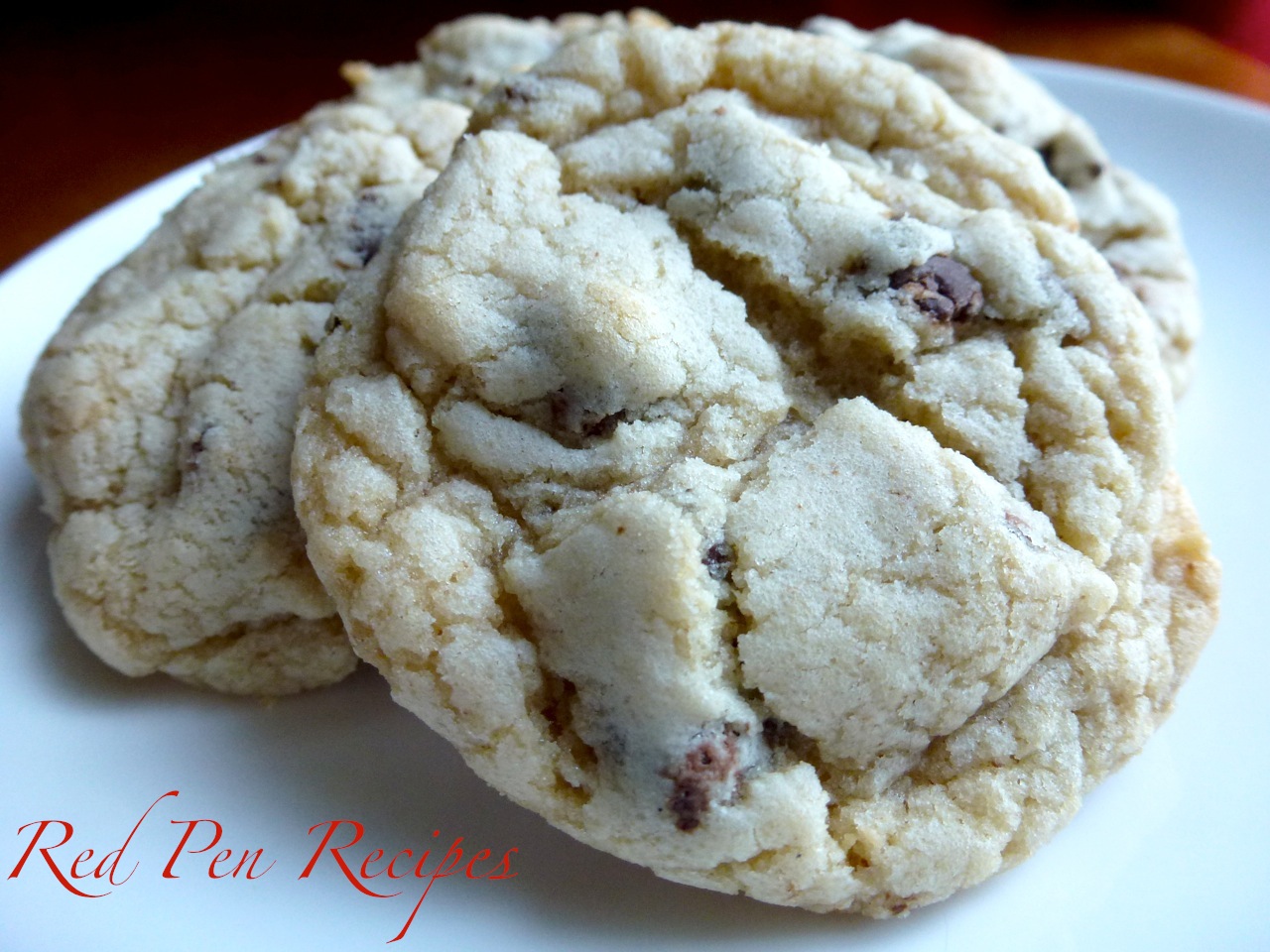
chocolatechipcookies090113

As I’ve said before, one of the most challenging things about moving to high altitude is that I can no longer make many of my favorite recipes as I used to and have them turn out the same. Cakes collapse and cookies spread out. Unfortunately, it also happens with chocolate chip cookies. Until last week, I still hadn’t figured out the best recipe for those classic cookies. I tried about six different recipes, including one intended for high altitude, all of which spread out or didn’t rise as I’d hoped they would. I’d had enough of that. They’re simple chocolate chip cookies, after all. So, I decided to figure out how to do it myself.

South Lake Tahoe is around 6,230 feet in elevation. A few things I’ve learned about baking at high altitude are that you need to reduce most leaveners (baking powder, baking soda) by about a half teaspoon, the salt needs to be increased, and extracts can also be increased. Cake batters tend to need to be wetter than usual, and things like brownies and cookies need a bit more flour than usual to keep from collapsing or spreading out too much. Sometimes baking at a lower or higher temperature makes a big difference, too, and things don’t brown as well as they do at sea level.

I opened up the Joy of Cooking to see what its guidelines for regular chocolate chip cookies called for, then made a bunch of adjustments based on these lessons. I increased the flour quite a bit, and turned the oven down by 25 degrees F. I kept a close eye on these cookies during the baking process and, voila, I finally came up with a chocolate chip cookie that is functional at high altitude. Believe it or not, finally getting this basic recipe down feels like a big win at this point. This will be the recipe I use going forward.

Ingredients
1/2 cup (1 stick) butter
1/2 cup sugar
1/2 cup light brown sugar
1 egg
1/2 teaspoon salt
2 teaspoons Mexican vanilla extract
1 1/3 cups flour
1/4 teaspoon baking soda
1 cup chocolate chips

Preheat oven to 350 degrees F. Line two baking sheets with parchment paper.

In a large bowl, combine butter and sugars. Butter should be at room temperature if you’re stirring by hand, but can be cold if using a stand mixer. Add egg, salt and vanilla. Stir until combined. Add flour and baking soda and stir until incorporated. Add 1 cup chocolate chips and stir until evenly distributed.

Shape dough into 1-inch balls. Place 18 on each baking sheet. Bake each sheet individually for 11 minutes, or until edges of cookies are golden brown, for firm cookies; or bake for 8-9 minutes, until puffy, for softer cookies and let cool completely before serving. Makes about 40 small cookies.