A recipe to ‘wow’ your guests

redvelvetcheesecakebrownies

Red Pen Recipes turned 1 year old on Friday. This time last year I was nervous about whether I’d have enough time to try new recipes often enough to write a new post each week. I’m happy to say this blog has kept me doing what I hoped it would: writing for pleasure and keeping me trying new things in the kitchen.

Of the 52 recipes I wrote about in the past year, the Rum Raisin Rice Pudding was one of my favorite new discoveries, and homemade applesauce was a close second. They’re both Barefoot Contessa recipes I hadn’t tried before.

To celebrate the one-year mark, I decided to reformat my blog. I chose this format for its cleaner look and to showcase the photos a little more. I hope you enjoy the new look.

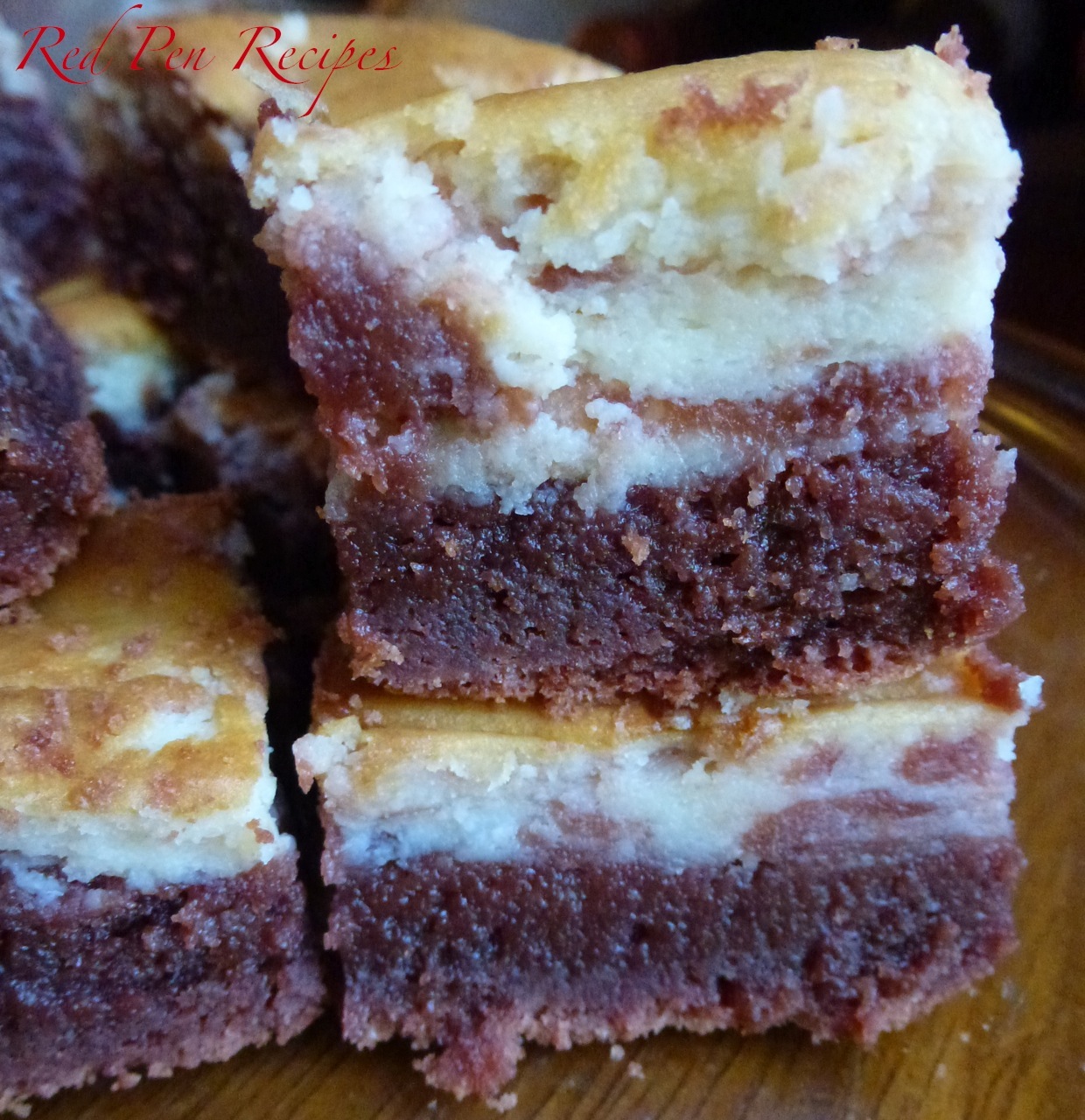
While Friday marked the first anniversary of Red Pen Recipes, it also marked the final day for one of my staff members. One of my reporters accepted a new job in Santa Fe, N.M., so I wanted to bake something special for her before she left. I flipped through some of my cookbooks and considered a few different items before I remembered the Red Velvet Cheesecake Brownies recipe a friend gave me a few years ago.

This recipe is something I save for special occasions, when I really want to “wow” someone. It combines three desserts a lot of people enjoy, and has yet to disappoint. Cheesecake, red velvet cake and brownies can each require a rather involved process, but this three-in-one treat is pretty simple to make — you just have to use three bowls to combine different ingredients before putting them together.

Thanks for reading. I look forward to bringing you more recipes in the coming year.

Ingredients
1/2 cup unsalted butter
2 ounces dark chocolate, coarsely chopped
1 cup sugar
2 large eggs
1 teaspoon vanilla extract
1 1/2 teaspoon red food coloring (or six drops red food gel)
2/3 cup all purpose flour (use 1 cup at high altitude)
1/4 teaspoon salt (use 1/2 at high altitude)
8 ounces cream cheese, room temperature
1/3 cup sugar
1 large egg
1/2 tsp vanilla extract (use 1 teaspoon at high altitude)

Preheat oven to 350 degrees F. Butter the bottom and sides of a 8-inch square baking pan. Put a long piece of parchment paper in the bottom of the pan, letting the parchment extend up two sides of the pan and overhang slightly on both ends. (This will make it easy to remove the bars from the pan after they have baked.) Butter the parchment.


In a small, heatproof bowl, melt butter and chocolate together in the microwave. Put it in 3 seconds at a time until soft enough to stir. Stir until combined and very smooth. Set aside to cool for a few minutes.


In a large bowl, whisk together sugar, eggs, vanilla extract and red food coloring. Add chocolate mixture and stir until smooth. Add flour and salt and stir until just combined and no streaks of dry ingredients remain. Pour into prepared pan and spread into an even layer.


To prepare cheesecake mixture, beat cream cheese, sugar, egg and vanilla extract in a medium bowl until smooth. Distribute the cheesecake mixture in eight dollops over batter in the pan. Swirl in with a knife or spatula.


Bake for 35-40 minutes (it could take up between 45 and 50 minutes at high altitude), until brownies and cheesecake are set. A knife inserted into the cheesecake mixture should come out clean and the edges will be lightly browned.


Let cool completely in pan on a cooling rack before lifting out the parchment paper to remove the brownies.
Cooling down with homemade ice cream

ApricotAlmondIceCream060913

The recent hot weather in Tahoe has made me reluctant to turn on my oven. When temperatures hover near 90 degrees, I don’t want to do much of anything.

My best friend recently gave me his old Cuisinart Automatic Frozen Yogurt-Ice Cream & Sorbet Maker, so last night I decided to turn it on and see how it went. I looked up the manual for the model online and downloaded it to figure out how the machine worked. Included in the manual were some basic ice cream recipes.

When I first decided to make the ice cream, I thought starting simple with a vanilla bean ice cream would be the way to go. Then I discovered I had some apricots that were just about to go bad. I also had almonds in my baking supplies cupboard. I used the manual’s recipe for strawberry ice cream as a guideline and improvised using the ingredients I had.

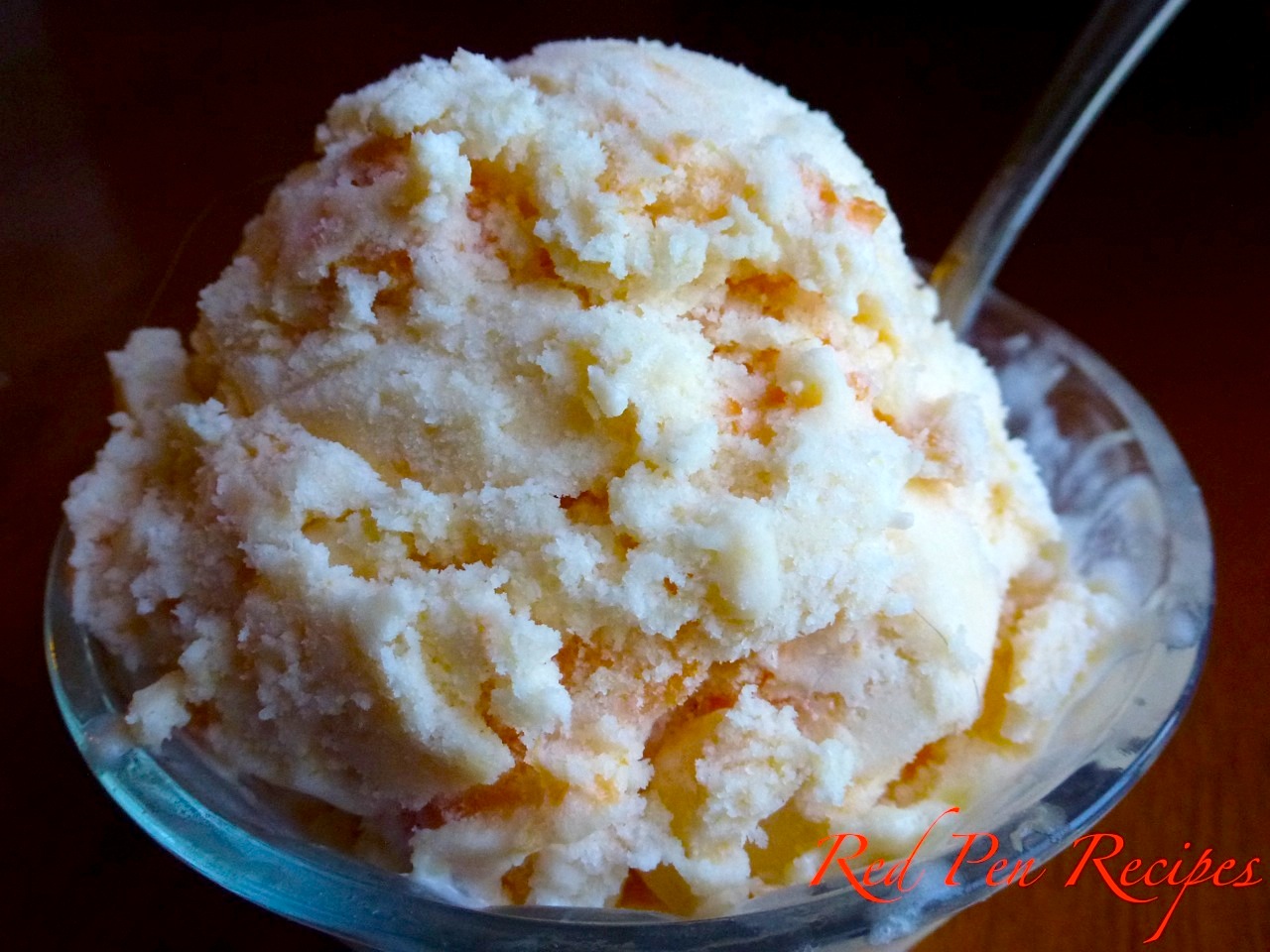
I didn’t have enough eggs to make any of the premium ice cream recipes, so the texture was more like that of frozen yogurt. The flavor was perfect. Next time I’ll make the higher-quality recipe for the firmer ice cream texture.

I stored some of my ice cream in plastic tupperware and turned the rest into popsicles. I think I might prefer this as a popsicle — it tasted like an apricot-almond creamsicle. While the tupperware is not ideal, it helps prevent freezer burn for a little while. I may invest in an ice cream-specific freezer container, because this definitely won’t be my last batch of homemade ice cream.

2ApricotAlmondIceCreamIngredients
6 ripe, soft apricots, mashed
3 tablespoons freshly squeezed lemon juice
1 cup sugar, divided
2 1/4 cups soy milk or whole milk
3/4 cup heavy cream
1/2 cup toasted almonds, chopped finely
2 drops amaretto oil
1/4 teaspoon cognac

In a small bowl, combine the apricots with the lemon juice and 1/3 cup of the sugar; stir gently and allow to sit for 20 minutes.

Meanwhile, in a medium bowl, use a whisk to combine the milk and granulated sugar until the sugar is dissolved. Stir in the heavy cream, amaretto oil and cognac, plus any accumulated juices from the apricot mixture.

Stir the almonds into the rest of the apricot mixture and set aside.

Turn the machine on, pour mixture into freezer bowl through ingredient spout and let mix until thickened, about 25-30 minutes. Add the apricot-almond mixture during the last 5 minutes of freezing.

Dreaming of summertime

strawberryshortcake1

When I went home for a visit a couple weeks ago, I was delighted to see the farm stands were already offering strawberries. I bought a box of them — six baskets for $6 — and ate a bowl of them daily for about a week once I returned to Tahoe. Still, I had about three baskets that needed to be baked into something to keep them from going bad. Good strawberries can’t be left to waste. I settled on strawberry shortcake, something I don’t make often, but enjoy quite a bit when it turns out just right.

I have never been crazy about those packaged shortcakes sold near the strawberries at the grocery store — the spongey ones that have somewhat of a dip at the top for the strawberries to sit in. I hadn’t made my own biscuits in a long time, so I turned to the Joy of Cooking to see what it suggested. It had a couple options, but I settled on cream biscuits this time around. They were, by far, the best ones I had ever made for strawberry shortcake. I am not big on rolling out dough; I prefer to shape it with my hands when I can. I divided the dough into eight pieces and formed them into rounds on a baking sheet. You may also roll out the dough and divide it into more pieces if you’d like. The biscuits were easy and the flavor and texture were just how I hoped they would be. Topped with the macerated strawberries (I added some of Penzeys Vanilla Sugar to the mixture for a bit of extra flavor) and whipped cream, this was the dessert I was craving. I was thrilled. Summer will be here soon enough.

Ingredientsstrawberryshortcake3
4 cups strawberries
1/4 cup sugar
1 1/2 cups heavy whipping cream
2 cups all-purpose flour
2 1/2 teaspoons baking powder (use 2 if at high altitude)
1/2 to 2/3 teaspoon salt (use one teaspoon if at high altitude)
1 1/4 cups heavy whipping cream

Rinse and quarter the strawberries. Using a potato masher or other tool, partially crush the strawberries. Put them in a bowl with the sugar. Set in fridge.

strawberryshortcake4Preheat the oven to 450 degrees F. Whisk together flour, baking powder and salt. Add 1 1/2 cups heavy whipping cream. Mix with a rubber spatula, wooden spoon or fork until most of the dry ingredients are moistened. Knead until smooth. Divide the dough into eight parts. Shape into 3-inch rounds that are about 3/4-inch thick. Place on a baking sheet with a sheet of parchment paper. Bake for 12 minutes or until slightly browned. Remove from oven and let cool for 15-20 minutes.

Whip the 1 1/4 cups heavy whipping cream until soft peaks form.

To assemble, cut the biscuits in half so there’s a top and bottom. Spoon generous spoonfuls of the strawberry mixture onto the bottom half of the biscuit. Top with a large dollop of whipped cream. Top with the other half biscuit.

Celebrating Easter with traditional Greek bread

GreekEasterbread

Most cultures have a special bread associated with religious holidays. St. Patrick’s Day has Irish soda bread, Christmas has stollen and Easter has Tsoureki Paschalino — Greek Easter bread.

I first saw a recipe for this sweet holiday bread in a San Francisco Chronicle food section in 2010. I liked the sound of the bread, but I didn’t want to make anything that produced three to four loaves and included a hard-to-find ingredient such as mahlepi, a fruity Greek spice. I opted to search for a more accessible version and found this.

Traditional versions of the bread call for cardamom and mahlepi, but I don’t like cardamom and mahlepi isn’t something most grocery stores carry. The version I made may be less traditional, but I had all the ingredients on hand and I enjoyed the flavor of the final product. I decided to make two 12-inch loaves instead of a 24-inch loaf so I could store one and serve the other one. Everyone enjoyed this sweet bread, especially warm with a bit of butter on it. It has a nice orange spice flavor and the egg adds a nice splash of color.

Regardless of what you eat today, I hope you have a happy Easter.

Ingredients
3 to 3 1/2 cups all-purpose flour
2 tablespoons sugar
1/2 package instant yeast
1/2 teaspoon salt
Zest of 1 large orange
Pinch of nutmeg
Pinch of cinnamon
1/2 cup milk whole milk, warmed to room temperature
1/2 stick (1/4 cup) unsalted butter, melted
2 large eggs, beaten slightly; set 1 tablespoon aside for glazing
1 tablespoon fresh orange juice
1/2 teaspoon vanilla

In a large mixing bowl, thoroughly combine 3 cups flour, sugar, yeast, salt, zest, nutmeg and cinnamon.

In another large bowl or the bowl of a stand mixer combine milk, butter, all but 1 tablespoon of eggs, orange juice and vanilla. Add flour mixture and combine well using a large spoon or the paddle attachment on the stand mixer.

If mixing by hand, scoop dough out onto a well-floured surface and knead for at least 15 minutes. Adding more flour if needed.

If using a stand mixer, swap to the dough hook. Knead for at least 10 minutes at medium speed, adding more flour as needed to keep the dough from becoming too sticky, although it will be somewhat tacky if kneaded in a mixer. Scoop dough onto a lightly floured surface.

Form dough into a ball by folding edges into the center, turning over and forcing into a ball shape using your palms and fingers to shape.

Clean and dry the largest bowl, then spray lightly with cooking spray. Place dough, seam-side down, in bowl and spray top lightly with oil. Cover bowl with plastic wrap and let rise until doubled in bulk — 1 1/2 to 2 hours.

Once the dough has risen, punch it down and scoop onto a lightly floured surface. Knead by hand for 3-5 minutes.

Shape the dough into a rope 24 inches long, fold in half, and braid. If you wish, place dyed, uncooked eggs in center of the fold before braiding. They’ll end up perfectly hard-cooked but difficult to peel.

Place the loaf on a greased cookie sheet or baking pan, spritz lightly with oil, and cover with plastic. Let rise until doubled in bulk — 1 1/2 to 2 hours. Thirty to 45 minutes before dough has completely risen, heat oven to 350 degrees.

Make an egg wash using the remaining egg and one tablespoon of water. Brush loaf with the wash. Bake for 30 minutes until golden brown. You can tell the bread is done in the center by tapping the top of the loaf. If it sounds hollow, the loaf is finished. Cool on a rack.

Bringing back a childhood dinner item

pierogies1

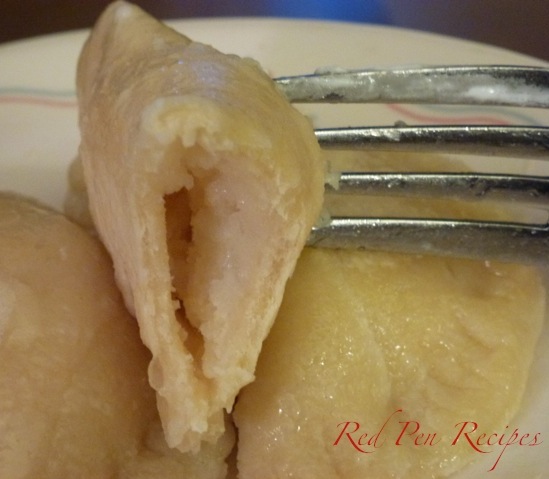
Growing up, pierogies and kielbasa was something we’d eat on a regular basis. If you’ve never had pierogies before, they’re pasta stuffed with a mashed potato mixture that often includes cheese. What kid doesn’t like cheesy potato pockets?

I had’t had pierogies in quite a while, so when I saw this recipe on Huffington Post, I thought it would be a fun one to try. We always ate pierogies from a box, so I wondered how different making them from scratch would be. I set forth with an idea of how they were supposed to taste, which is always helpful when tackling a new recipe.

Shaping the dough required more work than the recipe indicated. I found that it pierogies2was easiest to work with half of it at a time. After rolling it to one-fourth-inch thickness, I used the top of a cup to cut circles in it. But, from my experience with pasta, I knew leaving it that thick meant it would expand more during the cooking process. So, after cutting it into rounds, I rolled out each round to about half its original thickness. Sure enough, when the pierogies were cooked, the dough got thicker, so my instinct to roll out the rounds was a smart move.

The filling called for in the original recipe was not what I expected. It called for ricotta and much closer to a type of ravioli filling than the potato filling I wanted. So, the second time I made these, I made my own simple mashed potato filling and it was just what I wanted. The type of cheese you choose doesn’t matter as much as the consistency. Choose a harder cheese, such as an aged cheddar, to avoid making the filling oily.

After letting the dough rest for the allotted time and making the filling, it was time to assemble the pierogies. I set out a few rounds at a time, put a bit of filling on each one, brushed the edges with the egg wash and crimped the edges with my fingers. They were a good size, and I was happy they all stayed together during the cooking process.

I boiled and then fried them, about eight at at time, while keeping an 8-inch square glass baking dish in the oven on warm to keep the finished pierogies warm while the rest of them cooked. Boiling them makes them soft throughout, while frying them afterward browns them slightly, just so there’s a bit of crispness to the outside. They’re perfect like that. The recipe below, which I reduced to half of the original, makes about three dozen pierogies. If you’re cooking for one, I’d recommend freezing half of them after boiling them, and then frying the rest. They are good with a bit of sour cream, or whatever your heart desires. They reheat well, so keep a few in the fridge for a weeknight dinner.

Ingredients pierogies3
4 cups all-purpose flour, plus extra for flouring your work surface
1/2 teaspoon salt
3 tablespoons salted butter, melted
1 cup sour cream
1/8 cup corn oil
2 whole eggs
1 egg yolk
Two russet potatoes, peeled and mashed
1 cup cheese, grated
1 egg
All-purpose flour for sprinkling and flouring work surfaces and dough
4 tablespoons butter

Combine the flour and salt in the bowl of a stand mixer fitted with the dough pierogies4 hook. In a separate large bowl, combine the melted butter, sour cream, and corn oil. Beat the eggs and egg yolk together, and add them to the sour cream mixture. Whisk everything together well, so it forms a smooth, thick liquid.

Add the wet mixture to the flour in the mixer bowl, and mix on low speed for about a minute and a half, until you’ve got a thick dough.

Sprinkle some flour on your work surface, and knead the dough by hand, forming it into a ball. Then use a rolling pin to roll the dough out into a thick disk about the size of a Frisbee, or push it into this shape with your hands. (This will make the dough easier to work with when it’s cold.) Wrap the dough well in plastic wrap and chill it in the fridge for at least 6 hours.

Combine the mashed potatoes and cheese in a bowl and set aside.

Preheat the oven to 175 degrees F.pierogies5

Take the dough out of the fridge and let it come up to room temperature on the countertop until it’s soft enough to work with (about 20 minutes).

Whisk the eggs together in a small bowl.

Flour a work surface well. Using a rolling pin, roll out the dough in batches, turning it and rolling in every direction, including diagonally, until it’s basically the same thickness as one of the cookies in an Oreo. Use a round pastry cutter (or the mouth of a glass) to cut out as many rounds as possible from each piece of dough.

Using a pastry brush, lightly brush the top of each round of dough with the egg (so it will stick together when you close it up). Take the filling out of the fridge just before you’re ready to use it.

Put 1 tablespoon of the filling on the middle of each round. Then fold the round in half around the filling, so you’ve got a half-moon with the filling inside. Use your fingers to pinch the open sides closed all the way around, making little pinches all the way along the edges.

Put a large pot of well-salted water on to boil. While the water is heating, put the pierogies on a tray in the fridge so they cool down a little and the dough sets.

When the water comes to a boil, put the first batch of pierogies in the pot —about 8-10 at a time. The pierogies will take about 7 minutes to cook, depending on your stove and the thickness of your dough. They’re definitely not done until they float up to the top, and then they probably need another minute or two. The best way to know if they’re ready is to take one out, cut it open, and taste it.