Cocoa cookies are as cute as can be

cocoacookies copy

My 2013 cookie countdown to Christmas begins with this post. I know Thanksgiving hasn’t passed yet, but I’m already testing new recipes. I put my little Christmas tree up yesterday while listening to Christmas music, so the holidays are in full force at my place. I’m excited to share some new favorites with you.

My favorite new decorated cookie from last year was Food Network Magazine’s hot cocoa cookie recipe. I saw the recipe in the December 2012 edition as I was perusing for new recipes. The cookie is a chocolate cutout cookie topped with marshmallow cream. The recipe in the magazine called for making a sandwich cookie loaded with the cream, but it only makes 15 sandwich cookies — not enough for my large family. I decided to do a single cookie topped with the cream.

Though the recipe called for store-bought marshmallow cream, I pride myself on making things from scratch. This was no exception. While I know how to make marshmallows, I didn’t know how to make marshmallow creme. I turned to this recipe from Bon Appétit for help.

The chocolate cookie isn’t too rich, and the marshmallow cream was a really nice change from traditional icing or buttercream frosting, which is what I use on my sugar cookies. Plus, it gave me a chance to decorate in a different way. I love how they turned out. They just put a smile on my face.Christmaskitchen

Cookies
2 1/4 cups cake flour, plus more for dusting
1/4 cup unsweetened Dutch-process cocoa powder
1 teaspoon baking soda
1/4 teaspoon salt
2 sticks unsalted butter, at room temperature
3/4 cup sugar
1 large egg
1 teaspoon vanilla extract

Sift the flour, cocoa powder, baking soda and salt into a medium bowl.

Beat the butter and sugar in a large bowl with a mixer on medium-high speed until light and fluffy, 3 to 5 minutes. Add the egg and vanilla and beat until incorporated. Reduce the mixer speed to low; add the flour mixture in 2 batches and beat until just incorporated. Divide the dough in half, wrap in plastic wrap and refrigerate until firm, at least 1 hour and up to 1 day.

Line 2 baking sheets with parchment paper. Working with 1 piece of dough at a time, dust the dough generously with flour and roll out between 2 pieces of parchment paper until about 1/8-inch thick. Cut out shapes using 2- to 4-inch cookie cutters and transfer to the prepared baking sheets. Gather the scraps and refrigerate until firm; reroll once to cut out more cookies. Refrigerate the cutouts until firm, about 30 minutes.

Position racks in the upper and lower thirds of the oven and preheat to 350 degrees F. Bake the cookies, switching the position of the pans halfway through, until slightly puffed and darker around the edges, 12 to 15 minutes. Let cool 5 minutes on the baking sheets, then transfer to racks to cool completely. Sandwich the cookies with the marshmallow cream.

Marshmallow creme
1 cup sugar, divided
4 egg whites
Pinch of kosher salt
1 teaspoon vanilla extract

Combine 3/4 cup sugar and 1/4 cup water in a small saucepan over medium-high heat. Attach a candy thermometer to the side of the pan and simmer syrup without stirring until the thermometer reads 240 degrees F, occasionally swirling pan and brushing down sides of pan with a wet pastry brush.

Meanwhile, place egg whites, salt, and vanilla in the bowl of a stand mixer fitted with a whip attachment. Whip on high until frothy. Slowly add remaining 1/4 cup sugar. Whip until soft peaks form. Continue whipping until medium peaks form. Reduce speed to medium, then pour hot syrup into meringue in a slow, steady stream while whipping. Increase speed to high and continue whipping until stiff peaks form. Reduce speed to medium and whip until meringue is cool.

Coffee’s sidekick made easy at home

1biscotti092213

Biscotti might seem intimidating at first, but it’s really just a twice-baked, sweet, quick bread. Once you make it at home, you’ll no longer feel the need to buy it with your morning coffee.

This is the second time I’ve made biscotti in the past few years. The first recipe I used called for about 10 eggs, but this time I used the Orange Almond biscotti recipe from Cook’s Illustrated cookbook, which only called for two eggs. There was no noticeable difference in the texture of the finished biscotti.

Biscotti is a lot like a cookie in the way that, once you have a good base recipe, you can put whatever you want in it. The first time I made biscotti I put pistachios in it. This time around, I opted to add dried cranberries. You can also dip it in tempered chocolate for a special treat. Have fun making your own flavor combinations.

The most important thing to remember when making biscotti is to keep the slices a half-inch thick or less. Any thicker and the biscotti becomes hard to bite into when it’s done.

Enjoy!

Ingredients
2 cups all-purpose flour
1 teaspoon baking powder (use 1/2 teaspoon if at high altitude)
1/4 teaspoon salt (use 1/2 teaspoon if at high altitude
4 tablespoons unsalted butter, softened
1 cup sugar
2 large eggs
3/4 cup sliced almonds
1/3 cup dried cranberries
2 tablespoons grated orange zest
1/2 teaspoon vanilla extract (use 1 teaspoon if at high altitude)
1/2 teaspoon almond extract

Adjust oven rack to middle position and heat oven to 350 degrees F. Line baking sheet with parchment paper. Whisk flour, baking powder and salt together in small bowl.

Using a stand mixer fitted with the paddle attachment, beat butter and sugar together at medium-high speed until light and fluffy. Reduce speed to low and add eggs one at a time, then add almonds, cranberries, orange zest, vanilla and almond extracts until combined, about 30 seconds, scraping down bowl as needed. Stir in flour mixture until just combined.

Halve dough and turn each portion onto prepared baking sheet. Using floured hands, quickly stretch each portion of dough into rough 12-inch-by-2-inch loaf, placing them about 3 inches apart. Pat each loaf to smooth it. Bake until loaves are golden and just beginning to crack on top, about 35 minutes, rotating baking sheet halfway through baking.

Let loaves cool for 10 minutes; reduce oven temperature to 325 degrees. Using a serrated knife, cut each loaf diagonally into 1/2-inch slices. Lay slices cut side up about 1/2 inch apart on baking sheet and return them to the oven. Bake until lightly golden on both sides, about 15 minutes, turning over each piece halfway through baking. Immediately transfer biscotti from baking sheet to wire rack and let cool completely.

Celebrating Easter with traditional Greek bread

GreekEasterbread

Most cultures have a special bread associated with religious holidays. St. Patrick’s Day has Irish soda bread, Christmas has stollen and Easter has Tsoureki Paschalino — Greek Easter bread.

I first saw a recipe for this sweet holiday bread in a San Francisco Chronicle food section in 2010. I liked the sound of the bread, but I didn’t want to make anything that produced three to four loaves and included a hard-to-find ingredient such as mahlepi, a fruity Greek spice. I opted to search for a more accessible version and found this.

Traditional versions of the bread call for cardamom and mahlepi, but I don’t like cardamom and mahlepi isn’t something most grocery stores carry. The version I made may be less traditional, but I had all the ingredients on hand and I enjoyed the flavor of the final product. I decided to make two 12-inch loaves instead of a 24-inch loaf so I could store one and serve the other one. Everyone enjoyed this sweet bread, especially warm with a bit of butter on it. It has a nice orange spice flavor and the egg adds a nice splash of color.

Regardless of what you eat today, I hope you have a happy Easter.

Ingredients
3 to 3 1/2 cups all-purpose flour
2 tablespoons sugar
1/2 package instant yeast
1/2 teaspoon salt
Zest of 1 large orange
Pinch of nutmeg
Pinch of cinnamon
1/2 cup milk whole milk, warmed to room temperature
1/2 stick (1/4 cup) unsalted butter, melted
2 large eggs, beaten slightly; set 1 tablespoon aside for glazing
1 tablespoon fresh orange juice
1/2 teaspoon vanilla

In a large mixing bowl, thoroughly combine 3 cups flour, sugar, yeast, salt, zest, nutmeg and cinnamon.

In another large bowl or the bowl of a stand mixer combine milk, butter, all but 1 tablespoon of eggs, orange juice and vanilla. Add flour mixture and combine well using a large spoon or the paddle attachment on the stand mixer.

If mixing by hand, scoop dough out onto a well-floured surface and knead for at least 15 minutes. Adding more flour if needed.

If using a stand mixer, swap to the dough hook. Knead for at least 10 minutes at medium speed, adding more flour as needed to keep the dough from becoming too sticky, although it will be somewhat tacky if kneaded in a mixer. Scoop dough onto a lightly floured surface.

Form dough into a ball by folding edges into the center, turning over and forcing into a ball shape using your palms and fingers to shape.

Clean and dry the largest bowl, then spray lightly with cooking spray. Place dough, seam-side down, in bowl and spray top lightly with oil. Cover bowl with plastic wrap and let rise until doubled in bulk — 1 1/2 to 2 hours.

Once the dough has risen, punch it down and scoop onto a lightly floured surface. Knead by hand for 3-5 minutes.

Shape the dough into a rope 24 inches long, fold in half, and braid. If you wish, place dyed, uncooked eggs in center of the fold before braiding. They’ll end up perfectly hard-cooked but difficult to peel.

Place the loaf on a greased cookie sheet or baking pan, spritz lightly with oil, and cover with plastic. Let rise until doubled in bulk — 1 1/2 to 2 hours. Thirty to 45 minutes before dough has completely risen, heat oven to 350 degrees.

Make an egg wash using the remaining egg and one tablespoon of water. Brush loaf with the wash. Bake for 30 minutes until golden brown. You can tell the bread is done in the center by tapping the top of the loaf. If it sounds hollow, the loaf is finished. Cool on a rack.

Ginger cookies without the snap

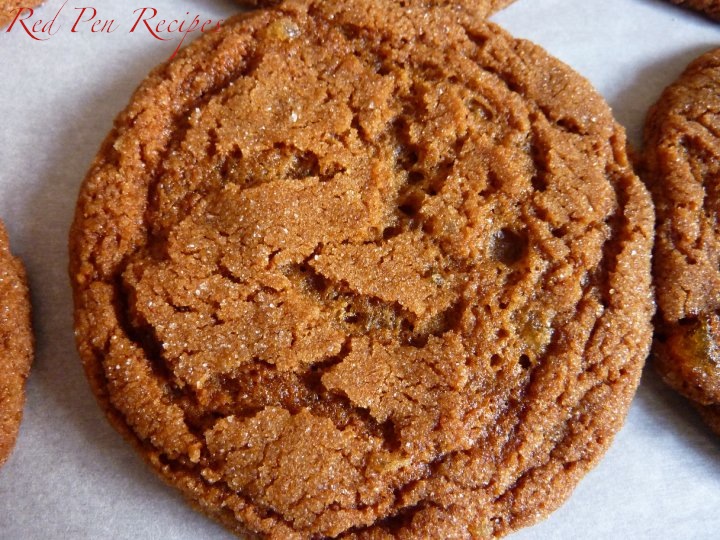
chewy ginger snaps

For my last Christmas cookie post of the season, I give you the chewy ginger cookie.

Years ago, I picked up a small container of The Ginger People crystallized ginger at Williams-Sonoma. At the time, I was just playing around with baking and I liked to pick up ingredients I hadn’t used before so I could figure out a way to use them. The ginger had a recipe on the back for the World’s Best Chewy Ginger Snaps. I’ve never been fond of ginger snaps, mostly because of the snap, but the concept of a soft version had never occurred to me. I tried the recipe and I liked it quite a bit. The ginger flavor wasn’t overwhelming and I got the soft cookie I had anticipated.

I put these on the Christmas Eve plate for two years in a row, and my family enjoyed them. This year I have opted for the chai spice cookies instead of these, but will be keeping this recipe on hand.

However you spend your holiday, I hope you and your family have a Merry Christmas.

Ingredients
2 cups + 2 tablespoons flour
1/2 teaspoon ground cloves
2 teaspoons baking soda
1 teaspoon ground ginger
1 teaspoon cinnamon
1/2 teaspoon salt
3/4 cup butter, softened
1 cup sugar
1/4 cup dark molasses
1 egg
3.5 ounces crystallized ginger, chopped coarsely
1/4 cup sugar for rolling dough

Preheat oven to 375 degrees F. Sift dry ingredients together. Set aside. Combine softened butter, sugar, molasses and egg. Using a mixing, beat well. Stir in crystallized ginger. Sift dry ingredients together. Add dry ingredients to wet mixture. Mix well. Form 1-inch balls. Roll in course sugar. Place on greased cookie sheet, 2 inches apart. Bake 8-10 minutes. Makes 3 dozen cookies.

A fancy take on traditional thumbprint cookies

Chocolate Turtle Cookies

The 2010 edition of America’s Test Kitchen’s Holiday Cookies magazine was a good one. Not only was it filled with a variety of concoctions, but more than half of the 64 recipes were actually good. I hate it when I buy a magazine containing what look like promising recipes, only to have them turn out poorly or not how I had hoped or expected.

One of my favorite recipes from this edition was Chocolate Turtle Cookies. They take the idea of thumbprint cookies to a whole new level with their chocolate cookie base, nutty adornment and chocolate filling. They’re one of the most gorgeous cookies I’ve ever made. If you love chocolate, caramel and nuts, this is the recipe for you. The recipe calls for melting caramels for the filling but, if you’re feeling ambitious, as I usually am, you can make the caramel from scratch using your favorite recipe.

If you’re working on a cookie platter for the holidays, be sure to give this recipe the time it deserves. It’s worth the effort and will make a nice addition to any dessert tray or other array of holiday food. If you don’t like pecans substitute peanuts or another kind of nut. You really can’t go wrong.

By the way, this week I passed 1,000 hits on my blog since I started it nearly six months ago. Thanks for reading.

Ingredients
1 cup all-purpose flour
1/3 cup cocoa powder
1/4 teaspoon salt
8 tablespoons (1 stick) unsalted butter, softened
2/3 cup sugar
1 large egg, separated, plus 1 egg white
2 tablespoons milk
1 teaspoon vanilla extract
1 1/4 cups pecans, chopped fine
14 soft caramel candies
3 tablespoons heavy cream

Combine flour, cocoa, and salt in bowl. With electric mixer on medium-high speed, beat butter and sugar until light and fluffy, 2 minutes. Add egg yolk, milk, and vanilla and mix until incorporated. Reduce speed to low and add flour mixture until just combined. Wrap dough in plastic wrap and refrigerate until firm, 1 hour.

Adjust oven rack to upper-middle and lower-middle positions and heat oven to 350 degrees F. Line 2 baking sheets with parchment paper. Whisk egg whites in bowl until frothy. Place pecans in another bowl. Roll dough into 1-inch balls, dip in egg whites, then roll in pecans. Place balls 2 inches apart on prepared baking sheets. Using 1/2 teaspoon, make indentation in center of each ball. Bake until set, about 12 minutes, switching and rotating sheets halfway through baking.

Microwave caramels and cream in bowl, stirring occasionally, until smooth, 1 to 2 minutes. Once cookies are removed from oven, gently re-press existing indentations. Fill each with 1/2 teaspoon caramel mixture. Cool 10 minutes, then transfer to wire rack to cool completely.