Apple-based soup is a refreshing change

1Hungarianapplesoup111713

This soup isn’t your average, run-of-the-mill soup. It isn’t loaded with cheese, it’s not mellow like the butternut squash soup recipe I posted a few weeks ago, and it’s definitely more tart than the white bean-and-rosemary soup I made earlier this year.

While I usually tend to favor more mellow flavors for soups, the tartness in this Hungarian Apple Soup was a refreshing surprise. When I was preparing it, I thought the potato would cancel out the apple flavor, but that flavor was first and foremost in the end. It was a pleasant surprise.

I doubled the recipe because I had two apples I needed to use, but you can visit the original recipe if you only want to make three cups of soup.

If you’re looking for a soup that will awaken your tastebuds as we head into winter, this is it.

Next week I’ll begin my cookie countdown to Christmas. Get ready for some new favorites with great flavor.

Ingredients
1 1/3 tablespoons canola oil
2 medium tart apples (such as Granny Smith), peeled and finely chopped
1 1/2 cups diced peeled Yukon Gold potato
2/3 cup finely chopped yellow onion
1/2 cup thinly sliced celery, plus leaves for garnish
1/2 teaspoon salt
1/2 teaspoon dried sage
Pinch of paprika, preferably hot Hungarian
Freshly ground pepper to taste
2 14-ounce cans reduced-sodium chicken broth
1/3 cup reduced-fat sour cream

Heat oil in a medium saucepan over medium heat. Add apple, potato, onion and celery; cook, stirring often, until the onion is translucent, about 5 minutes. Stir in salt, sage, paprika and pepper; cook for 30 seconds. Pour in broth and bring to a simmer. Reduce heat, cover, and gently simmer until the potato is tender when pierced with a fork, 10 to 15 minutes.

Transfer the soup to a large blender or food processor, add sour cream and process until smooth. (Use caution when pureeing hot liquids.) Garnish with celery leaves, if desired.

A sweeter spin on scalloped potatoes

2scallopedsweetpotatoes111013

Some vegetables stump me when it comes to figuring out new ways to prepare them. Sweet potatoes are one I struggle with. Outside of baking them or cutting them up into small pieces and frying them, I didn’t really know what else to do with them — that is, until I saw a recipe for Pumpkin Scalloped Potatoes on Pinterest.

The sauce for this recipe is sweet, and the thyme lends a really nice flavor to it. The first time I made this, I used both Yukon Gold potatoes and yams, but the combination of the sweeter sauce and the Yukon Gold potatoes didn’t taste quite right to me. I liked the idea of making a pumpkin cream sauce with herbs for the potatoes, so I made the dish a second time only using yams. It was much better.

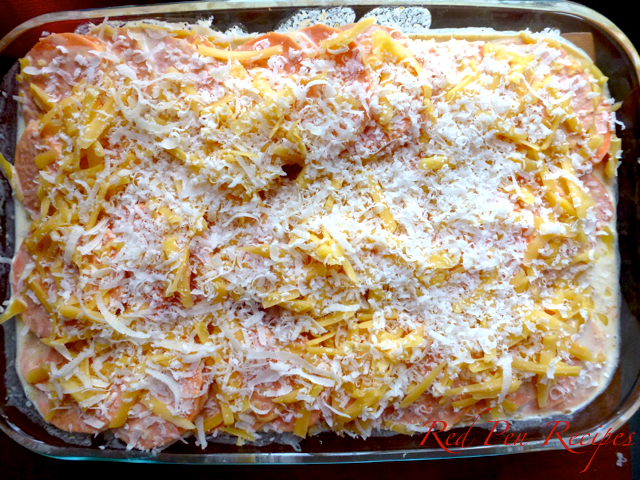
I used a mandolin slicer to cut the potatoes, and it was really nice to have all the pieces cut uniformly. I used cheddar and Parmesan, since that’s what I had in the fridge. The cheese added a much-needed savory flavor to the dish, which helps balance the overall taste.

This dish is a great way to make the most of fall flavors. It’s a nice comfort food for cold days, too. I may consider making it for Thanksgiving this year.

1scallopedsweetpotatoes111013Ingredients
1 1/2 cups heavy whipping cream
1/2 cup unsweetened pumpkin puree
1 sprig fresh thyme (or 1/3 teaspoon dried thyme)
2 garlic cloves, smashed
1/4 teaspoon ground nutmeg (freshly grated is best!)
2 large yams or sweet potatoes, peeled and cut into 1/8-inch slices
kosher salt and freshly ground black pepper
4 ounces Fontina, Havarti or cheddar cheese, shredded
1/2 cup freshly grated Parmesan cheese

Preheat the oven to 375 degrees F. Spray a 2-quart casserole dish with nonstick spray.

In a medium saucepan, combine the cream, pumpkin, thyme, garlic and nutmeg and heat over medium-low heat. While the cream sauce is warming, prepare the potatoes.

Create three rows of potatoes along the bottom of the dish, overlapping slightly and alternating the two types of potatoes. Sprinkle with salt and pepper. Remove the cream from heat (fishing out the thyme and garlic and discarding those) and spoon 1/3 of the cream sauce over the potatoes. Combine the two cheeses in a medium bowl. Sprinkle 1/3 of the cheeses over the potatoes too. Create a second layer of potatoes, sprinkle with salt and pepper and drizzle with 1/3 more of the sauce and 1/3 more of the cheese. Create a third layer of potatoes, sprinkle with salt and pepper and drizzle with the remainder of the sauce.

Bake the potatoes, uncovered, for 50 minutes. Sprinkle the remainder of the cheese on top, and bake for an additional 5 to 10 minutes, or until the cheese is slightly browned and bubbly.

Broccoli bites take snacks back to basics

1broccolibites

I recently saw this broccoli bites recipe on Pinterest. It seemed simple enough, so I thought I’d give it a shot.

This is a nice, basic recipe that only calls for four ingredients, which leaves plenty of room to experiment with other flavors and additions. It doesn’t require any special equipment, either. Mix it with your hands, form it into patties and bake. That’s it.

Next time I make these, I will likely use 1/2 cup of cheddar and 1/2 cup Parmesan, because I wanted more bite to them. Or, I might try a sharper cheddar — medium didn’t offer the flavorful punch I wanted.

The most difficult thing to figure out was what to serve them with. I tried sour cream, but it wasn’t quite right. So I tried a bit of mayonnaise with worcestershire, which was better; but I think ranch dressing might be the best option — I just didn’t have any on hand.

2broccolibitesFor something to snack on, these are pretty hearty and filling.

Ingredients
1 head of fresh broccoli, cut and steamed
1 cup cheddar cheese, grated
2 eggs
1/2 cup of Italian breadcrumbs
Salt and pepper to taste

Preheat the oven to 375 degrees. Line a baking sheet with parchment paper.

Mix the ingredients together in a large bowl. Form small patties and place on the baking sheet.

Bake for 15 minutes, then turn over patties and bake for another 10 minutes.

Let cool for up to 5 minutes. Serve warm.

Potato salad fit for summer

potatosalad

The warmer weather in Tahoe has me thinking about being outside — and the food that comes with it.

Summer is a time for barbecues and picnics, and potato salad is one of the first dishes that comes to mind when I think of eating outside.

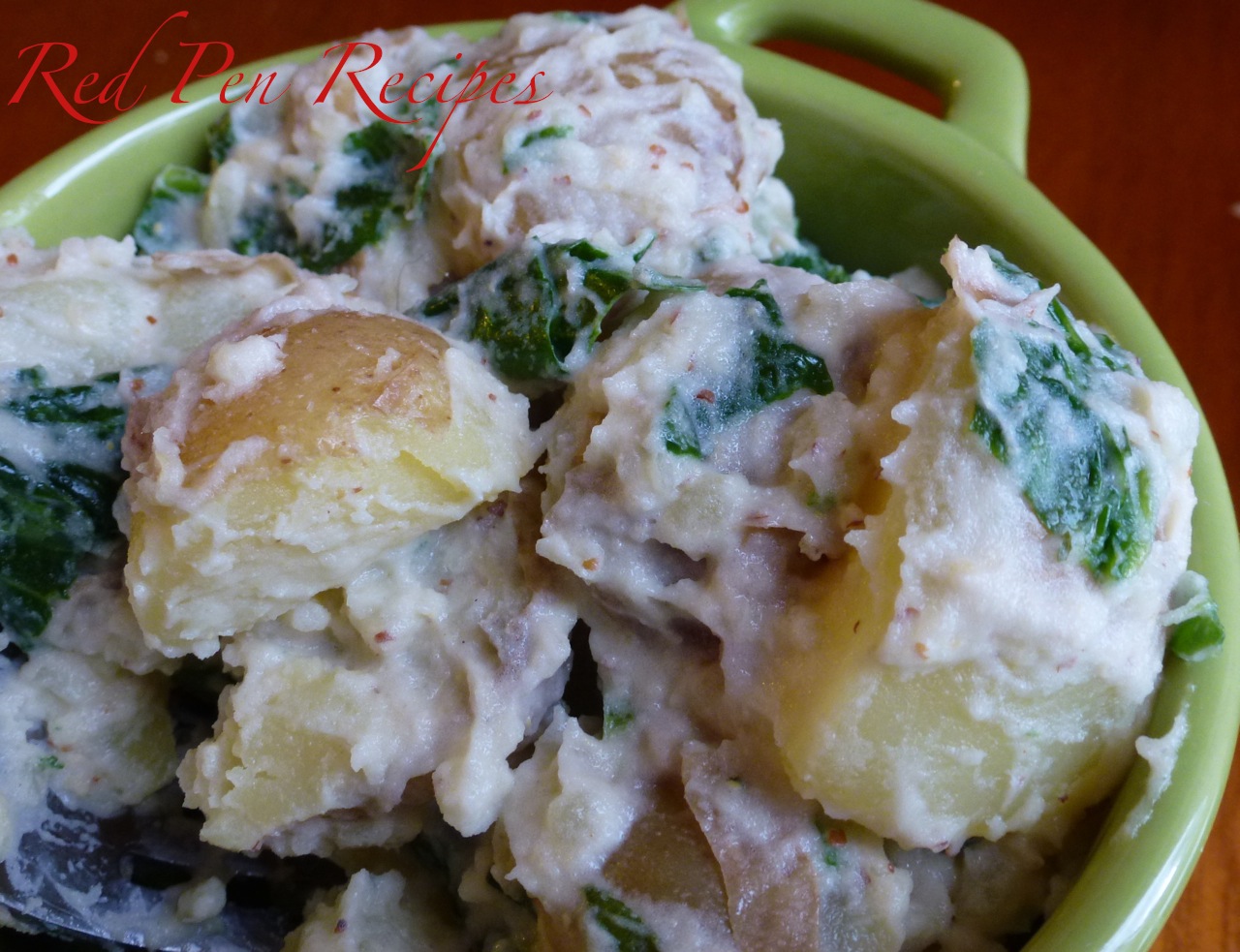
Champagne vinegar and dijon mustard are the dominate flavors in this version of the dish. The first time I used champagne vinegar in potato salad was after watching an episode of the Barefoot Contessa in which Ina Garten made this French Potato Salad. I hadn’t considered the combination before, but it has since become my go-to ingredient.

The recipe below is based on Garten’s recipe. I didn’t have all of the ingredients her recipe called for, so I improvised. If you’re looking for an alternative to your mom’s potato salad recipe, this is a great option.

Ingredients
1 1/2 pounds baby gold Yukon potatoes
3 tablespoons champagne vinegar
3 tablespoons chicken broth
2 tablespoons mayonnaise
1/2 teaspoon dijon mustard
10 leaves of spinach or basil, ripped into small pieces
A small bunch of chives, cut into small pieces
Dash of salt
Dash each of garlic powder, onion powder

Boil the potatoes in a pot of water for 20-30 minutes, or until tender when pierced with a fork. Drain pot. Let potatoes cool for about 10 minutes. Cut into quarters and place in a medium bowl. Add vinegar and chicken broth. Toss gently and let sit until the potatoes have soaked up the liquid.

Once the liquid has been absorbed, add the mayonnaise, dijon mustard, chives and spinach or basil. Mix and add salt and spices to taste. Refrigerate until ready to serve.

Bringing back a childhood dinner item

pierogies1

Growing up, pierogies and kielbasa was something we’d eat on a regular basis. If you’ve never had pierogies before, they’re pasta stuffed with a mashed potato mixture that often includes cheese. What kid doesn’t like cheesy potato pockets?

I had’t had pierogies in quite a while, so when I saw this recipe on Huffington Post, I thought it would be a fun one to try. We always ate pierogies from a box, so I wondered how different making them from scratch would be. I set forth with an idea of how they were supposed to taste, which is always helpful when tackling a new recipe.

Shaping the dough required more work than the recipe indicated. I found that it pierogies2was easiest to work with half of it at a time. After rolling it to one-fourth-inch thickness, I used the top of a cup to cut circles in it. But, from my experience with pasta, I knew leaving it that thick meant it would expand more during the cooking process. So, after cutting it into rounds, I rolled out each round to about half its original thickness. Sure enough, when the pierogies were cooked, the dough got thicker, so my instinct to roll out the rounds was a smart move.

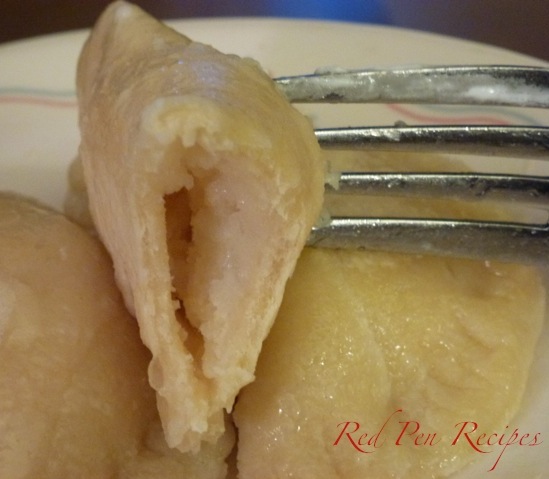
The filling called for in the original recipe was not what I expected. It called for ricotta and much closer to a type of ravioli filling than the potato filling I wanted. So, the second time I made these, I made my own simple mashed potato filling and it was just what I wanted. The type of cheese you choose doesn’t matter as much as the consistency. Choose a harder cheese, such as an aged cheddar, to avoid making the filling oily.

After letting the dough rest for the allotted time and making the filling, it was time to assemble the pierogies. I set out a few rounds at a time, put a bit of filling on each one, brushed the edges with the egg wash and crimped the edges with my fingers. They were a good size, and I was happy they all stayed together during the cooking process.

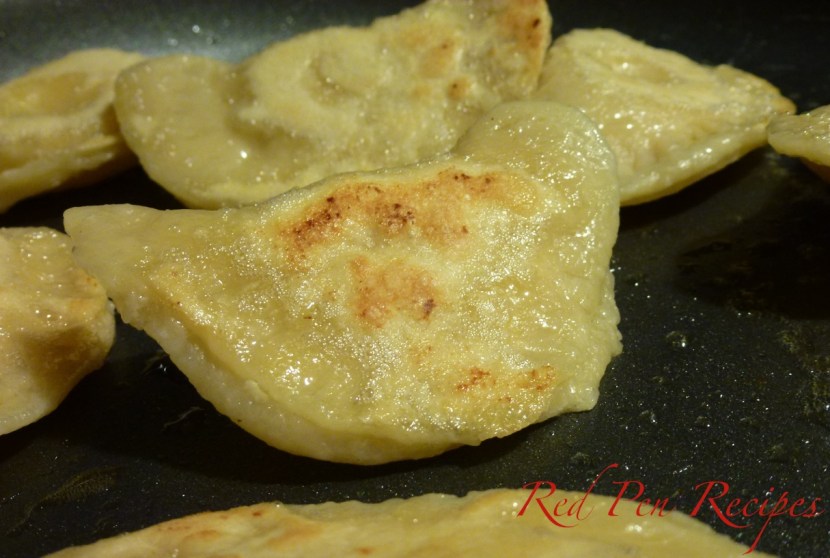
I boiled and then fried them, about eight at at time, while keeping an 8-inch square glass baking dish in the oven on warm to keep the finished pierogies warm while the rest of them cooked. Boiling them makes them soft throughout, while frying them afterward browns them slightly, just so there’s a bit of crispness to the outside. They’re perfect like that. The recipe below, which I reduced to half of the original, makes about three dozen pierogies. If you’re cooking for one, I’d recommend freezing half of them after boiling them, and then frying the rest. They are good with a bit of sour cream, or whatever your heart desires. They reheat well, so keep a few in the fridge for a weeknight dinner.

Ingredients pierogies3
4 cups all-purpose flour, plus extra for flouring your work surface
1/2 teaspoon salt
3 tablespoons salted butter, melted
1 cup sour cream
1/8 cup corn oil
2 whole eggs
1 egg yolk
Two russet potatoes, peeled and mashed
1 cup cheese, grated
1 egg
All-purpose flour for sprinkling and flouring work surfaces and dough
4 tablespoons butter

Combine the flour and salt in the bowl of a stand mixer fitted with the dough pierogies4 hook. In a separate large bowl, combine the melted butter, sour cream, and corn oil. Beat the eggs and egg yolk together, and add them to the sour cream mixture. Whisk everything together well, so it forms a smooth, thick liquid.

Add the wet mixture to the flour in the mixer bowl, and mix on low speed for about a minute and a half, until you’ve got a thick dough.

Sprinkle some flour on your work surface, and knead the dough by hand, forming it into a ball. Then use a rolling pin to roll the dough out into a thick disk about the size of a Frisbee, or push it into this shape with your hands. (This will make the dough easier to work with when it’s cold.) Wrap the dough well in plastic wrap and chill it in the fridge for at least 6 hours.

Combine the mashed potatoes and cheese in a bowl and set aside.

Preheat the oven to 175 degrees F.pierogies5

Take the dough out of the fridge and let it come up to room temperature on the countertop until it’s soft enough to work with (about 20 minutes).

Whisk the eggs together in a small bowl.

Flour a work surface well. Using a rolling pin, roll out the dough in batches, turning it and rolling in every direction, including diagonally, until it’s basically the same thickness as one of the cookies in an Oreo. Use a round pastry cutter (or the mouth of a glass) to cut out as many rounds as possible from each piece of dough.

Using a pastry brush, lightly brush the top of each round of dough with the egg (so it will stick together when you close it up). Take the filling out of the fridge just before you’re ready to use it.

Put 1 tablespoon of the filling on the middle of each round. Then fold the round in half around the filling, so you’ve got a half-moon with the filling inside. Use your fingers to pinch the open sides closed all the way around, making little pinches all the way along the edges.

Put a large pot of well-salted water on to boil. While the water is heating, put the pierogies on a tray in the fridge so they cool down a little and the dough sets.

When the water comes to a boil, put the first batch of pierogies in the pot —about 8-10 at a time. The pierogies will take about 7 minutes to cook, depending on your stove and the thickness of your dough. They’re definitely not done until they float up to the top, and then they probably need another minute or two. The best way to know if they’re ready is to take one out, cut it open, and taste it.